TradeVanta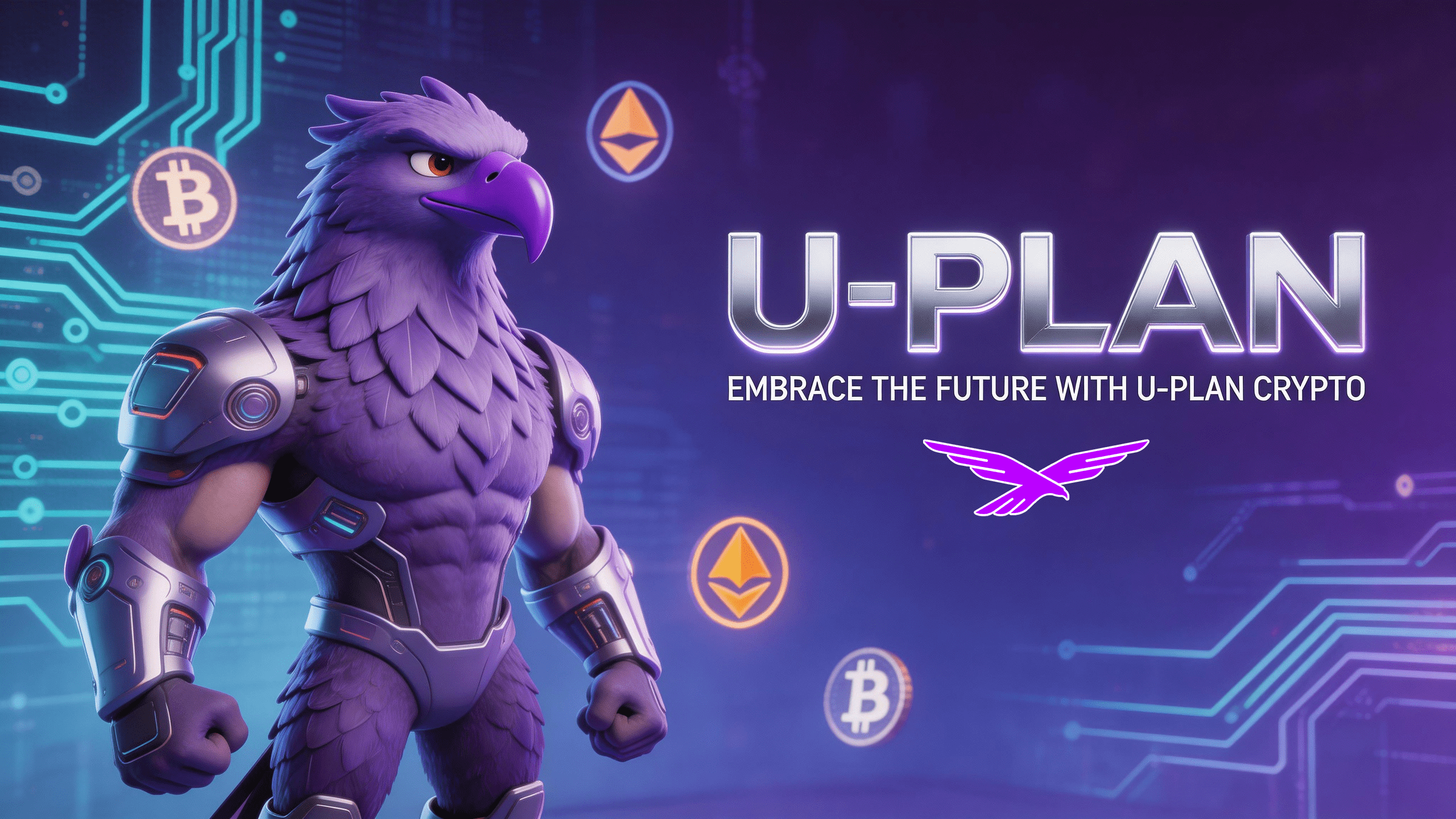
U-PLAN (World Liberty Financial & USD1 Plan) is advancing its global expansion strategy with a large-scale ecosystem initiative backed by approximately $1 billion in funding. As competition intensifies across the Web3 and stablecoin sectors, the project is positioning itself as a capital-driven growth engine designed to accelerate user adoption, liquidity formation, and real-world financial integration.
At a time when many decentralized finance projects struggle to sustain long-term growth, U-PLAN is taking a different approach by combining capital deployment with structural design. Rather than relying solely on organic expansion or short-term incentive programs, the project integrates funding directly into its ecosystem architecture, using capital as a tool to drive liquidity, user onboarding, and application development simultaneously. This strategy reflects an increasing trend in the industry, where scale is no longer achieved through isolated protocols, but through coordinated financial ecosystems.

Central to this strategy is the dual-token model built around USD1 and WLFI. USD1, a USD-pegged stablecoin backed by cash and U.S. Treasury assets, provides the financial stability necessary for large-scale capital movement and settlement. WLFI, on the other hand, functions as the governance and incentive layer, enabling the alignment of user participation with ecosystem expansion. Together, these two assets form the foundation upon which U-PLAN’s capital strategy operates, ensuring that liquidity inflows are not only sustained but also effectively distributed across the network.
The $1 billion allocation is expected to be deployed across multiple key areas, including liquidity infrastructure, global market expansion, ecosystem partnerships, and application development. Unlike traditional funding models that prioritize marketing or token price performance, U-PLAN’s capital strategy focuses on building long-term financial depth. By strengthening liquidity pools, enhancing cross-platform integrations, and supporting real-world use cases, the project aims to create a more resilient and scalable financial system.
According to project materials , the long-term vision of U-PLAN includes establishing a million-user holder base and achieving a hundred-billion-dollar ecosystem valuation. While these targets are ambitious, they are supported by a structured growth model that combines capital injection with user expansion mechanisms. This dual approach is designed to ensure that growth is not only rapid but also sustainable, reducing reliance on speculative market cycles.
In addition to its capital-driven expansion, U-PLAN is actively positioning itself within the broader stablecoin narrative. As stablecoins increasingly become the backbone of digital finance—supporting payments, lending, and cross-border settlement—projects that can integrate stability with scalability are gaining strategic importance. By anchoring its ecosystem around USD1, U-PLAN aims to capture this momentum and extend stablecoin usage beyond trading into practical financial scenarios.
The project’s expansion strategy also reflects a growing convergence between traditional finance and decentralized systems. By incorporatinginstitutional-grade custody solutions and aligning with global financial infrastructure trends, U-PLAN is building a framework that can potentially accommodate both retail and institutional participants. This positioning may allow it to play a more significant role as stablecoins continue to evolve into a core component of the global financial system.
As the Web3 industry enters a new phase of development, capital efficiency and ecosystem scalability are becoming critical factors in determining long-term success. U-PLAN’s $1 billion strategy signals a shift toward more structured and resource-backed growth models, where financial strength is used not only to accelerate expansion but also to reinforce the underlying infrastructure of digital finance. If executed effectively, this approach could position U-PLAN as a key player in the next wave of global stablecoin adoption.