TradeVanta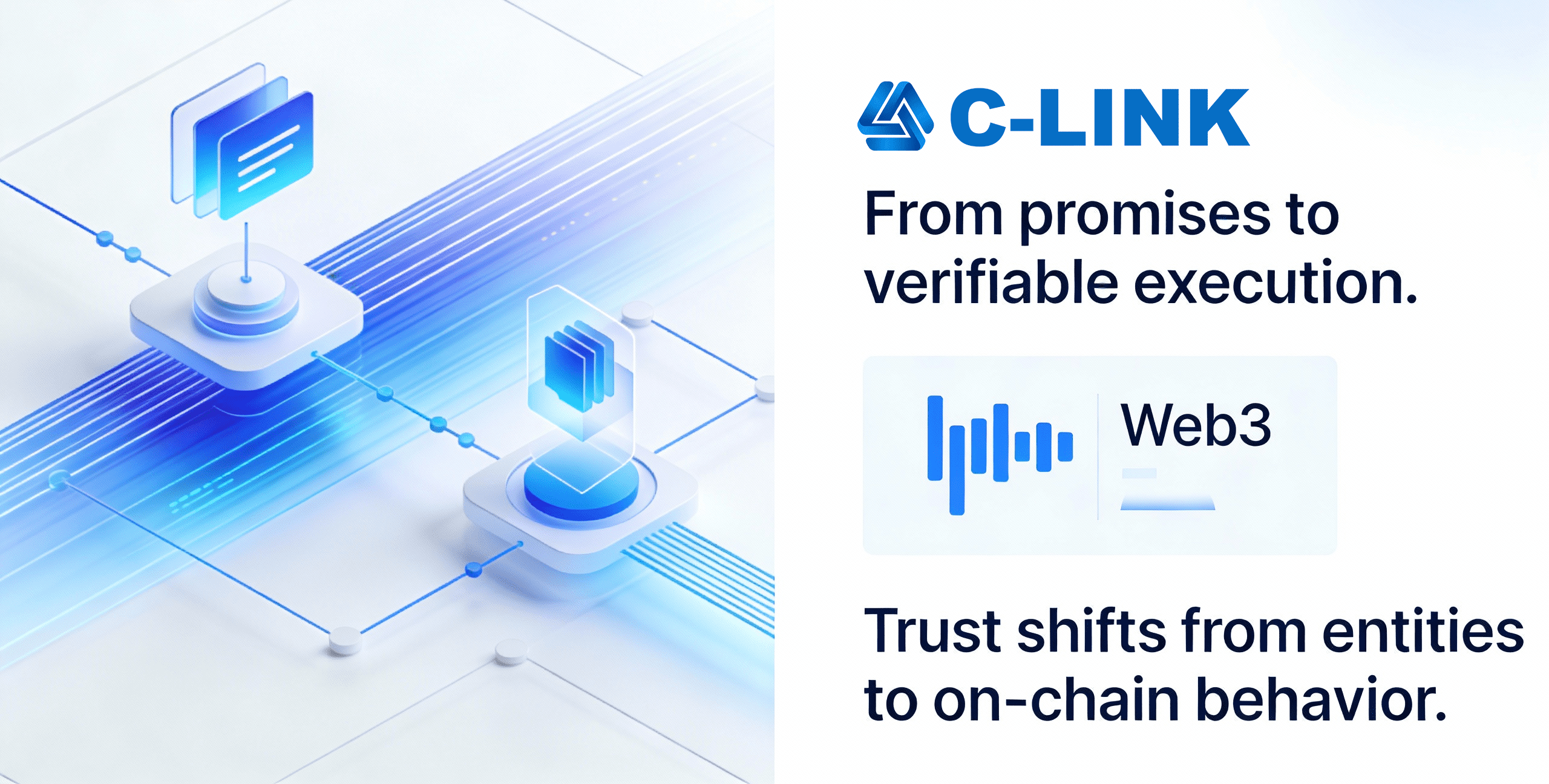
As decentralized finance continues to mature, the industry’s focus is gradually shifting away from rapid experimentation toward structural reliability. Beyond innovation speed, questions around rule enforcement, transparency, and long-term operability are becoming central to how Web3 systems are evaluated.
Within this context, initiatives such as C-LINK—incubated by LINK Capital—illustrate a growing emphasis on rule-based system design rather than discretionary governance.
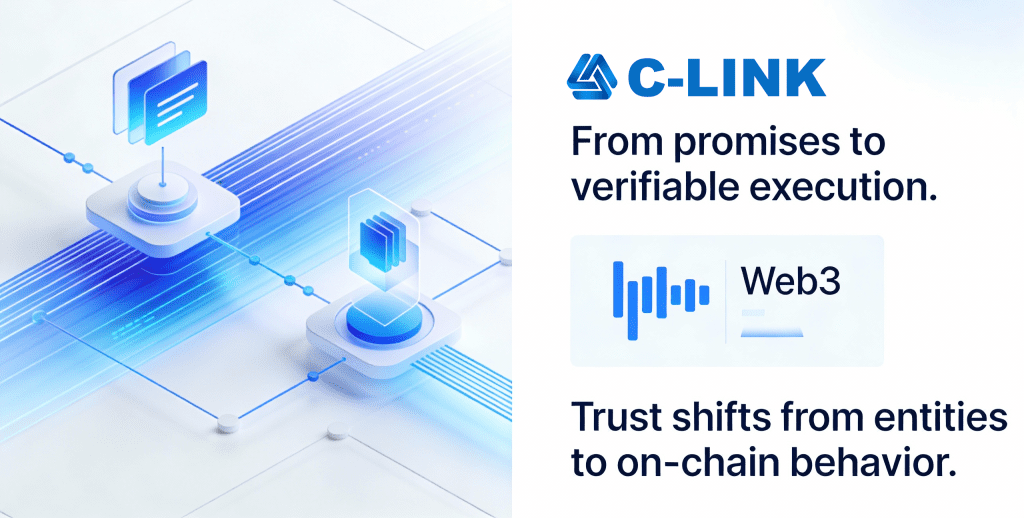
From Promises to Verifiable Execution
One of the persistent challenges in decentralized finance is the gap between stated decentralization and actual execution. While many platforms promote openness, their operational rules often remain adjustable through off-chain decisions or privileged controls.
This model introduces uncertainty. When participants cannot independently verify how rules are enforced, trust gradually shifts away from code and back toward centralized actors.
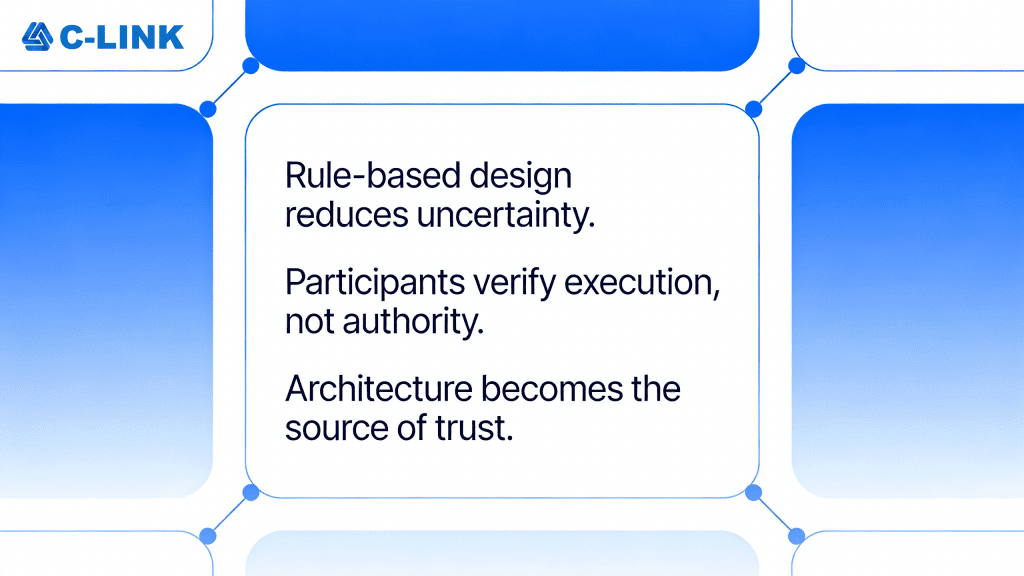
Rule-based ecosystems aim to address this issue by embedding operational logic directly into smart contracts. In such systems, execution is no longer dependent on intent or interpretation, but on deterministic on-chain behavior.
The Role of On-Chain Rules
On-chain rules serve as a structural anchor within decentralized systems. By defining how processes operate at a protocol level, they reduce ambiguity and ensure consistency across all interactions.
In ecosystems designed around this principle, participants can observe not only outcomes, but also the mechanisms behind them. Transactions, interactions, and system behaviors become auditable through public blockchain data, allowing trust to emerge from transparency rather than reputation.
This approach represents a shift from “trusting entities” to “verifying execution.”
Structural Design Over Operational Discretion
A rule-centric design does not eliminate governance or maintenance. Instead, it establishes clear boundaries between what can be adjusted and what remains immutable.
By codifying core logic on-chain, discretionary intervention is limited to predefined parameters. This separation helps protect system integrity while still allowing structured evolution over time.
In the case of C-LINK, this philosophy prioritizes architectural clarity over operational flexibility, emphasizing predictability as a foundation for long-term participation.
Reducing Information Asymmetry
Information asymmetry has long been a friction point in financial systems—both traditional and decentralized. When system behavior cannot be independently verified, participants are forced to rely on external disclosures or centralized updates.
Rule-based ecosystems reduce this dependency. With on-chain execution, the same data is accessible to all participants simultaneously, minimizing gaps in understanding and interpretation.
As a result, collaboration becomes rule-driven rather than authority-driven, fostering a more balanced and transparent environment.
Implications for the Broader Web3 Landscape
As Web3 evolves, projects built on verifiable structures may gain increased relevance. Institutional participants, developers, and long-term users are increasingly prioritizing systems that demonstrate stability through design rather than growth through narrative.
Rule-based decentralized ecosystems reflect a broader trend toward infrastructure-first thinking—where trust is engineered through architecture, not persuasion.
By focusing on how systems operate rather than how they are promoted, projects like C-LINK contribute to an ongoing conversation about what sustainable decentralization can look like in practice.